


Frequently Asked Questions About Cooktops - FOTILE
Last Updated: 9/25/2026
Author: James Zhao, Sr. Tech Specialist & Alex Park, Product Specialist
Choosing a cooktop starts with one decision: fuel type. Gas, radiant electric, and induction each come with their own hookup, cookware, ventilation, and cleaning needs. Below, our product team answers the questions we hear most, using the specs from our own cooktops.
What are the different types of cooktops available?
- Gas: Burns natural gas or propane under a grate. You see the flame and adjust it instantly.
- Radiant electric: Heating elements under smooth ceramic glass warm the glass, which then heats the pan.
- Induction: A magnetic field under the glass heats the pan itself. The glass only gets hot from contact with the pan.
- Modular (domino): 12-inch, one or two zone units you can install alone or side by side to build a custom width.
- Downdraft: A cooktop with a built-in vent that pulls smoke down or rises up behind the burners. It saves space on islands but captures less than an overhead hood.

What is the difference between a gas and electric cooktop?
Gas heats with a flame. Electric heats with a glowing element (radiant) or a magnetic field (induction). That one difference changes almost everything else about owning one:
| Gas | Radiant Electric | Induction | |
|---|---|---|---|
| Hookup | Gas line plus a 120V outlet for the igniter | 240V circuit | 240V circuit |
| Cookware | Almost anything, including round-bottom woks | Flat-bottom pans | Magnetic pans only |
| Heat response | Instant | Slow to heat and cool | Instant |
| Ventilation | Vent outside to remove combustion gases | Hood for smoke and grease | Hood for smoke and grease |
| Cleaning | Grates, caps, and burners | Flat glass, but spills can bake on | Flat glass, spills rarely bake on |
For a deeper look at cooking results, see our guide to cooking with gas vs. electric.
What is an induction cooktop?
An induction cooktop uses a copper coil under the glass to create a magnetic field. When a magnetic pan sits on the zone, the field heats the pan directly. With no pan, or a pan that isn't magnetic, nothing heats up. That's why induction boils water faster and wastes less energy than any other type.
What are the benefits of gas cooktops?
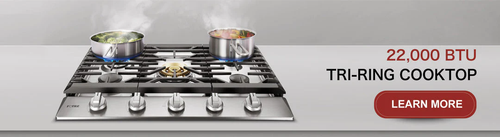
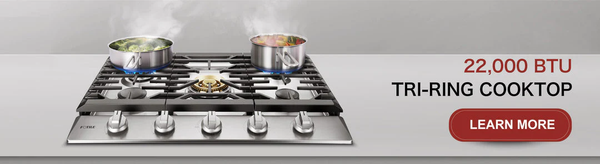
- High heat on demand: The center Tri-Ring burner on our stainless steel cooktops reaches 21,000 BTUs on the 30-inch model and 22,000 on the 36-inch, enough for searing and stir-frying.
- Instant, visible control: Turn the knob and the flame changes right away.
- Works with any cookware: A flame wraps around curved pans, so gas is still the best choice for wok cooking and charring peppers or tortillas right on the burner.
Where gas falls short: It's the least efficient option, sending only about a third of its heat into the pan. It adds heat and combustion gases to your kitchen, so it needs a hood that vents outside. And grates and burner caps take more time to clean than flat glass.
What are the benefits of electric cooktops?
- Easy cleanup: A flat glass surface wipes clean with no grates to lift.
- Steady low heat: Good for simmering sauces and slow cooking.
- Flexible zones: Our InstantHeat cooktops include a bridge zone that joins two elements into one long surface for griddles and oversized pans.
- No gas line needed: Just a 240V circuit.
Where radiant electric falls short: It heats and cools slower than gas or induction, so turning the dial down won't stop a boil right away. The glass stays hot after you turn it off (our models show a residual heat light). Glass can also scratch if you slide heavy pans across it.
What are the benefits of induction cooktops?
- Speed: According to ENERGY STAR, induction boils water in less than half the time of gas or standard electric.
- Precise control: Our 12" Domino induction cooktop runs from 100 to 3,200 watts, low enough to melt chocolate and high enough to sear.
- Cooler, cleaner glass: The glass only warms from contact with the pan, so spills rarely burn on.
- Efficiency: It wastes the least energy of any cooktop type (see energy efficiency below).
When induction is the wrong choice:
- You aren't ready to replace non-magnetic cookware like aluminum, copper, or glass.
- You or someone in your home has a pacemaker or implanted defibrillator. Harvard Health advises keeping 12 to 24 inches between the device and the cooktop. Ask your cardiologist before you buy.
- Your electrical panel can't add a 240V circuit without an upgrade.
- You cook with a round-bottom wok often.
Also know that induction can hum or buzz on high power, especially with lightweight or layered pans, and a cooling fan may run for a few minutes after you turn it off. Both are normal.
What cookware works on my cooktop?
- Induction: Use the magnet test. If a magnet sticks firmly to the bottom of the pan, it works. Cast iron, enameled cast iron, carbon steel, and most "induction ready" stainless steel pass. Aluminum, copper, glass, and some stainless steel don't. Pick pans with a flat base close to the size of the zone.
- Radiant electric: Use flat-bottom pans that sit fully on the glass. Match the pan to the element so heat isn't wasted around the edges. Lift heavy cast iron instead of sliding it.
- Gas: Nearly any pan works. Our Tri-Ring gas cooktops include a wok ring to hold round-bottom woks steady.
What is a tri-ring burner cooktop?
A tri-ring burner has three rings of flame (or three heating rings on electric) in one burner. You run only the inner ring for low heat or all three for full power, so one burner covers the whole range from a gentle simmer to a hard sear.
Here's how the rings map on our electric InstantHeat Tri-Ring element:
| Ring | Size | Power | Use It For |
|---|---|---|---|
| Inner | 6" | 1,200W | Sauces, melting butter, small saucepans |
| Inner + middle | 9" | 2,400W | Everyday sautéing and frying pans |
| All three | 12" | 3,600W | Boiling a pasta pot, searing in a large skillet |
On our gas Tri-Ring cooktops, the center burner reaches 18,000 to 22,000 BTUs depending on the model. Lighting only the inner ring gives you steady low heat for delicate dishes.
See how it compares in our triple ring vs. double ring burner guide, or learn how many BTUs you need.
What is the difference between a single and a double burner cooktop?
A single burner cooktop has one cooking zone, and a double burner has two. Both are smaller than a standard cooktop.
- Single burner: Fits small kitchens or works as an add-on next to a main cooktop. Our 12" Domino cooktops come in induction and radiant electric, and you can install two or more side by side to build the setup you want.
- Double burner: Two burners give you room to cook two dishes at once. Our 30" EPS gas cooktop has two 14,800 BTU burners with space for large pots.
What size cooktop should I choose for my kitchen?
- 30-inch: The standard size. Fits four or five burners and works for most households.
- 36-inch: Adds room between pots. A good fit if you cook for a crowd or often use large pans at the same time.
- 12-inch: For tight spaces, a second cooking station, or pairing induction with gas.
Replacing an old cooktop? Measure your existing counter opening first. A new cooktop that fits the same cutout saves you from cutting the counter. The installation answer below lists our cutout sizes.
What do I need to install a cooktop?
- Gas: A gas line with a shutoff valve in reach, plus a standard 120V outlet under the counter for the igniter. On our Tri-Ring cooktops, the gas connects at the bottom and the power cord reaches about 39 inches.
- Radiant electric: Our InstantHeat cooktops need a dedicated 240V (or 208V) 40-amp circuit, hardwired through conduit.
- 12" Domino: A 240V, 15-amp circuit, hardwired.
- Cutout: Check the spec sheet before you cut. For example, the 30" GLS30501 needs an opening between 28 1/2 and 29 inches wide and 19 5/8 to 20 1/8 inches deep. The 36" GLS36502 needs 33 7/8 to 35 inches wide and 19 1/8 to 20 1/2 inches deep.
Hire a licensed gas fitter for gas lines and a licensed electrician for new 240V circuits. Many areas require a permit for both. Moving from gas to electric? Our guide to switching from gas to electric covers panel upgrades.
Do I need a range hood over my cooktop?
For gas, yes. Burning gas releases carbon monoxide and nitrogen dioxide along with heat and grease, and only a hood that vents outside removes those gases. For electric and induction, a hood still clears the smoke, grease, and steam that cooking creates.
Size the hood to your cooktop:
- Gas: About 100 CFM for every 10,000 BTUs. Our 30" GLS30501 totals 56,000 BTUs, so it needs at least 560 CFM.
- Electric or induction: About 100 CFM for every 12 inches of width. A 30-inch cooktop needs at least 250 CFM.
- Width: The hood should be at least as wide as the cooktop.
Pairing a hood? Find your CFM and see how our cooktops can turn on a FOTILE hood automatically (below).
Are there any energy-efficient options available for cooktops?
Yes. Induction is the most efficient, followed by radiant electric, then gas. According to ENERGY STAR:
- Gas sends about 33% of its heat into your food.
- Electric cooktops send 74% to 85%, depending on the technology.
- Induction is 5% to 10% more efficient than standard electric and up to three times more efficient than gas.
Your actual cost depends on local gas and electric rates, so gas can still cost less to run in some areas. On any cooktop, you'll save energy by matching the pan to the burner and using a lid.
How do I properly clean and maintain my cooktop?
Let the surface cool first, and skip steel wool and scouring powder on any type.
- Glass tops (radiant, induction, and glass gas cooktops): Wipe spills as soon as it's safe, since sugary spills can pit the glass. Use a glass cooktop cleaner and a razor scraper held at a low angle for burned-on spots. Our guide on how to clean a glass stove top walks through each step.
- Gas burners: Lift off the grates and burner caps and wash them in warm, soapy water. Dry every part fully and set each cap flat before you light the burner, since water and a crooked cap are the top causes of ignition problems.
- Induction: Spills rarely bake on, so a damp cloth handles most cleanup. Keep the cooling vents clear.
Why won't my cooktop ignite or heat up?
- Gas burner won't light: Check that the cooktop is plugged in and the breaker is on, since the igniter needs power. Then make sure the burner cap sits flat and dry.
- Igniter keeps clicking: Moisture or a shifted cap is the usual cause. Let the burner dry and reseat the cap.
- Flame goes out and the gas shuts off: That's the flame failure device doing its job. On our cooktops, it cuts the gas within 20 seconds if the flame goes out. Check for a draft, a spill, or a cap out of place.
- Yellow or uneven flame: Clean clogged burner ports. If you run propane, confirm the cooktop was converted with the LP kit.
- Induction zone won't heat: The pan may not be magnetic, may be too small, or may be off center. Try the magnet test.
- Electric cooktop won't turn on: Check the breaker, then see if the child lock or panel lock is on.
Still stuck? Contact FOTILE support with your model number and warranty card handy.
What should I look for when buying a cooktop?
- Fuel and hookup: Choose a fuel your kitchen already supports, or budget for a new gas line or 240V circuit.
- Width and cutout: Match your counter opening if you're replacing a cooktop.
- Burner range: For gas, look for one burner at 15,000 BTUs or more for searing and one around 3,000 BTUs for simmering.
- Safety: Flame failure detection on gas, plus child lock and residual heat lights on electric and induction.
- Ventilation: Budget for a hood sized to your cooktop.
- Warranty: Our gas Tri-Ring cooktops carry a 5-year limited warranty on parts.
Are there any special considerations for outdoor cooktops?
Yes. Indoor cooktops, including ours, are built for indoor, built-in use. Outdoors, choose a unit rated for outdoor use, since wind can blow out flames and rain and temperature swings can damage parts. Most outdoor units run on propane or natural gas.
Questions We Hear About FOTILE Cooktops
Which FOTILE cooktop is right for my kitchen?
| Series | Sizes | Burners or Zones | Top Output | Best For |
|---|---|---|---|---|
| Tri-Ring, Stainless Steel (GLS30501, GLS36502) | 30", 36" | 5 | 21,000 to 22,000 BTU | High-heat cooking, woks, and griddles |
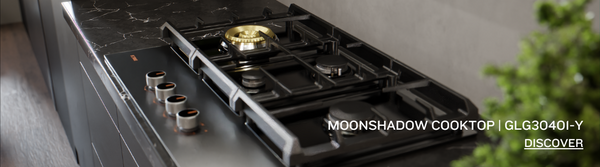
| Tri-Ring, Glass and Moonshadow (GLG30301, GLG30401, GLG36501) | 30", 36" | 3 to 5 | 18,000 BTU | Gas cooking with a glass finish that wipes clean |
| EPS (GAG76202) | 30" | 2 | 14,800 BTU | Two large burners with room for big pots |
| InstantHeat Electric (EEG30411, EEG36511) | 30", 36" | 4 to 5 | 3,600W | Homes without gas that want a flexible Tri-Ring zone |
| Domino Induction (EIG30102) | 12" | 1 | 3,200W | Small kitchens or adding induction next to gas |
| Domino Electric (EEG30101) | 12" | 1 | 2,400W | Small kitchens or a second cooking station |
Cook with a wok or sear often? Start with the stainless steel Tri-Ring.
Can I use a FOTILE gas cooktop with propane?
Yes. Every Tri-Ring gas cooktop can run on natural gas or propane, and the propane conversion kit comes in the box. Have a qualified installer do the conversion.
Will my FOTILE cooktop work with my FOTILE range hood?
Select models, yes. Our InstantHeat electric cooktops (SynCook) and select Tri-Ring gas cooktops can turn on a compatible FOTILE range hood as soon as you start cooking, so the hood is already running when the smoke starts.
Cooktops Built to Work With Your Range Hood
FOTILE designs cooktops and range hoods together. That means burners and elements sized for real high-heat cooking, flame failure protection on every gas model, and select cooktops that start your hood for you.