





Range Hoods: Frequently Asked Questions Answered | FOTILE
Author: James Zhao, Sr. Tech Specialist & Alex Park, Product Specialist
Most range hood questions come down to four decisions: whether you need one, how much power it needs, how high to mount it, and whether it can vent outside. Below, our product team answers each one with the sizing math, ducting rules, and tradeoffs to know before you buy.
What is a range hood and what does it do?
A range hood sits above your stove or cooktop and uses a fan to pull smoke, grease, and odors up through a filter. From there, it either vents the air outside through a duct or cleans it with a charcoal filter and sends it back into the kitchen.

What are the different types of range hoods?
- Wall-mounted: The most common type. Mounts on the wall above the range, usually with a chimney cover up to the ceiling.
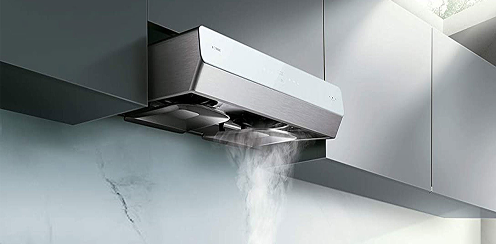
- Under-cabinet: Mounts under the cabinet above your range, so you keep that storage.
- Island: Hangs from the ceiling over an island cooktop.
- Insert: A fan unit built into custom cabinetry or a decorative hood cover.
- Downdraft: Pulls smoke down through the cooktop or rises up behind it. Saves space on islands but captures less than an overhead hood, especially with tall pots.
How do I measure for a range hood?
- Cooktop width: The hood should be at least as wide as your cooktop. Three extra inches on each side catches more smoke.
- Mounting height: Most manufacturers call for 20 to 24 inches above electric and 24 to 30 inches above gas. Your hood's manual sets the true minimum and wins over any general rule. For example, our JQG7505 manual calls for at least 24 inches above gas. Go much higher than 30 inches and smoke escapes past the edges.
- Cooktop to ceiling: Wall and island hoods come with chimney covers that fit a set range of ceiling heights. Check the spec sheet. Taller ceilings need a chimney extension.
- Duct path: Note where the duct can exit through the wall or roof. Shorter and straighter performs better.
How do I know which size range hood I need for my kitchen?
Width is covered above. Power is measured in CFM (cubic feet per minute), and the math depends on your fuel type:
- Electric: About 100 CFM for every 12 inches of cooktop width. A 30-inch cooktop needs at least 250 CFM, and a 36-inch needs at least 300.
- Gas: About 100 CFM for every 10,000 BTUs. Add up every burner. A range with 60,000 total BTUs needs at least 600 CFM.
- Island: Size up. With no wall behind the cooktop, cross drafts pull smoke away from the hood.
- Professional gas ranges: These can top 80,000 total BTUs, which puts you at 800 to 900+ CFM. At this level, plan for make-up air (see ducting below).
Treat these numbers as a floor. Searing, stir-frying, and wok cooking make more smoke than BTU math predicts, so go above the minimum and look for a boost or stir-fry mode. Just don't overshoot. Extra CFM adds noise and can trigger make-up air rules.
Know your number? Compare hoods by CFM or see our lineup below.
What are the benefits of having a range hood in my kitchen?
- Cleaner air: Clears smoke, fumes, and odors before they spread through your home.
- Less grease buildup: Keeps grease from settling on cabinets, walls, and ceilings.
- Less heat and steam: Keeps the kitchen more comfortable while you cook.
- Better lighting: Puts direct light on the cooktop.
Can I install a range hood myself or should I hire a professional?
A ductless hood that mounts under a cabinet and plugs in is a job many handy homeowners can take on. A ducted hood is a bigger project. It often means cutting through a wall or roof, running duct, sealing an exterior cap, and wiring the unit. For that, hire a licensed installer who knows your local code.
- Cost: Angi puts labor for a swap or ductless install at roughly $100 to $300. New ductwork can add $500 or more, and roof work or make-up air adds more.
- Electrical: Most home hoods run on a standard 120-volt circuit, either hardwired or plugged in. Your manual lists the circuit size and whether it needs its own circuit.
Doing it yourself? Start with our installation guide and turn off power at the breaker first.
How should a range hood be ducted?
The duct matters as much as the hood. A strong fan on a long, bent, or undersized duct moves far less air than its rating.
- Match the duct to the hood outlet. Use the size in your manual and never step it down. Most FOTILE wall and under-cabinet hoods connect to a 6-inch round duct.
- Use rigid, smooth metal duct. Flexible foil or plastic traps grease and cuts airflow.
- Keep the run short. Aim for under 30 feet straight, under 25 feet with one elbow, and under 20 feet with two. Every elbow adds resistance.
- Go straight up first. When you can, run 18 to 24 inches of straight duct above the hood before the first turn.
- Always vent outside. Never end a duct in an attic, crawl space, or wall cavity, where grease and moisture lead to mold and fire risk. Finish at a wall or roof cap with a backdraft damper.
- Plan for make-up air on bigger hoods. The air your hood pushes out has to be replaced. The International Residential Code, which many areas follow, requires make-up air for hoods over 400 CFM.
What is the difference between a vented and a non-vented range hood?
A vented (ducted) hood sends smoke, heat, moisture, and odors outside. It works best but takes more install work.
A non-vented (ductless or recirculating) hood runs air through a grease filter and a charcoal filter, then sends it back into the kitchen. It's easier to install, but it can't remove heat, moisture, or combustion gases, and the charcoal filters need regular replacing.
Ductless works for condos, apartments, and interior kitchens with no path outside, plus light cooking on electric or induction.
It falls short for gas ranges, frequent searing or wok cooking, and open kitchens where smoke spreads fast. In those cases, venting outside is worth the extra work.
Not sure yet? A convertible hood can go in ducted now and switch to ductless later with a recirculation kit, or the other way around.
Can I use a range hood with a gas stove?
Yes, and gas is where a hood matters most. Gas burners give off carbon monoxide and nitrogen dioxide along with heat, moisture, and grease. A ductless hood filters grease and odors but not those gases, so vent outside if you cook on gas.
Size the hood to your total BTUs using the math above, mount it at least 24 inches over the burners (or what your manual lists), and run it on low any time the burners are on.
How loud is a range hood?
Noise is listed in sones or decibels (dB), and the two don't convert neatly, so compare hoods on the same scale. Sones track how loud a sound feels: 2 sones sounds twice as loud as 1. Decibels work on a log scale, where every 10 dB jump sounds about twice as loud.
- Compare the speed you'll actually use. Many brands list only the quietest setting.
- A bigger duct and shorter run make any hood quieter, since the fan works less.
- FOTILE hoods list a minimum of 37 to 39 dB on the lowest setting, depending on the model.
Are there any specific building codes or regulations that I need to be aware of when installing a range hood?
Codes vary by city and state, so check with your local building department first. The most common rules cover metal ducts that end outside, make-up air for hoods over 400 CFM, electrical wiring, and minimum mounting height. The ducting answer above covers the venting details.
What is the difference between a wall-mounted and an island range hood?
A wall-mounted hood hangs on the wall above a range. An island hood hangs from the ceiling over an island cooktop.
With no wall behind it, an island hood loses smoke to air currents in open kitchens. That's why island hoods usually run wider and stronger. Go wider than the cooktop, add CFM, and plan the duct path through the ceiling before you lock in the layout.
What is the difference between a range hood and a microwave hood?
An over-the-range microwave pairs a microwave with a small vent fan. It saves space, but most move far less air than a dedicated hood, and they sit shallow over the cooktop, so they miss much of the smoke from the front burners.
A range hood is built only to ventilate. If you cook often, especially on gas, it's the better pick. A microwave hood fits a small kitchen with light cooking.
How often should I clean my range hood?
- Metal mesh or baffle filters: These trap grease on most vented hoods. Clean them every 1 to 3 months in warm, soapy water or the dishwasher if your model allows.
- Charcoal filters: These remove odors on ductless hoods. They can't be washed, so replace them every 3 to 6 months.
- Exterior: Wipe weekly with a damp cloth and mild dish soap.
- Grease cup and fan area: Turn off power, then empty and wipe every few months.
- Ductwork: Have it checked for grease buildup every year or two.
A clogged filter chokes airflow, so a dirty hood pulls in less smoke and runs louder.
What materials can range hoods be made of?
- Stainless steel: The most popular choice. Durable, easy to clean, and rust resistant.
- Tempered glass: Wipes clean easily and looks modern. Many FOTILE hoods pair black or white glass with stainless steel.
- Copper or wood: Statement looks that need more upkeep. Wood is usually a cover built around an insert hood.
How do I troubleshoot problems with my range hood?
- Won't turn on: Check the plug and the breaker.
- Weak suction: Clean or replace the filters first. Then check for a crushed duct, a stuck damper, or a run that's too long.
- Noise or rattling: Clean the fan blades and make sure the hood is tight to the wall or cabinet.
- Lights out: Replace the bulb or LED module.
Still stuck? Contact FOTILE support with your model number and warranty card handy.
Questions We Hear About FOTILE Range Hoods
Which FOTILE range hood is right for my kitchen?
| Series | Sizes | Airflow | Best For |
|---|---|---|---|
| Pixie Air (UQG3002, UQG3602) | 30", 36" | 850 Max Equiv. CFM, 410 Pa static pressure | Under-cabinet installs, ducted or ductless with a kit |
| Classic (JQG7501, JQG9001) | 30", 36" | 850 Max Equiv. CFM | Everyday cooking with touchscreen controls |
| Prestige (JQG7505, JQG9006) | 30", 36" | 1,000 Max Equiv. CFM | Frequent high-heat cooking, with stir-fry mode |
| Prestige Performance (JQG7507, JQG9007) | 30", 36" | 1,100 Max Equiv. CFM | Heavy smoke, with auto start when paired with a FOTILE cooktop |
| VentiCore (JQG7515, JQG9015) | 30", 36" | 669 CFM certified | Heavy cooking with Wi-Fi and app control |
| Perimeter Vent (EMG7508, EMG9008S) | 30", 36" | 1,200 CFM | Large or open kitchens that need the most airflow |
| Island (EA06C) | 42" | 1,200 Max Equiv. CFM | Island cooktops |
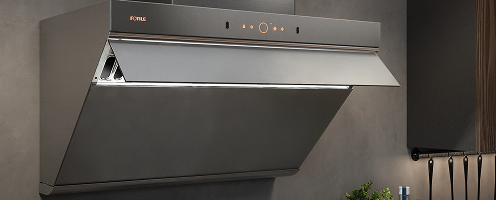
Our inclined hoods (Classic, Prestige, Prestige Performance, and VentiCore) use a Capture Shield that opens close to the cooktop to trap smoke before it spreads. Cooking on a gas range over 60,000 BTUs or using a wok often? Start with Prestige or above.
What does "Max Equivalent CFM" mean?
Most of our hoods list Max Equivalent CFM. It's FOTILE's rating of how our inclined, close-capture design performs compared to a traditional hood, so it reflects how much smoke the hood captures, not just raw fan airflow. VentiCore lists a certified CFM instead, measured under a standard industry test. When comparing brands or checking make-up air rules, ask your dealer or our support team which number applies.
Can I convert a FOTILE range hood to ductless?
Yes, on select models. Our Pixie Air under-cabinet hoods run ductless with the optional Recirculation Kit, and a Horizontal Vent Kit lets the duct exit through the wall behind the hood. If you'll never vent outside, the 24" EMS6008-CR is built for ductless only.
There's no standard test for recirculating hood performance, so the airflow and grease ratings we list are measured with the hood ducted.
Built by the Team That Invented the Inclined Hood
FOTILE created the inclined range hood to handle high-heat cooking that traditional hoods struggle with. Every hood in our lineup is built on that same idea: capture smoke close to the source, before it reaches your cabinets.