








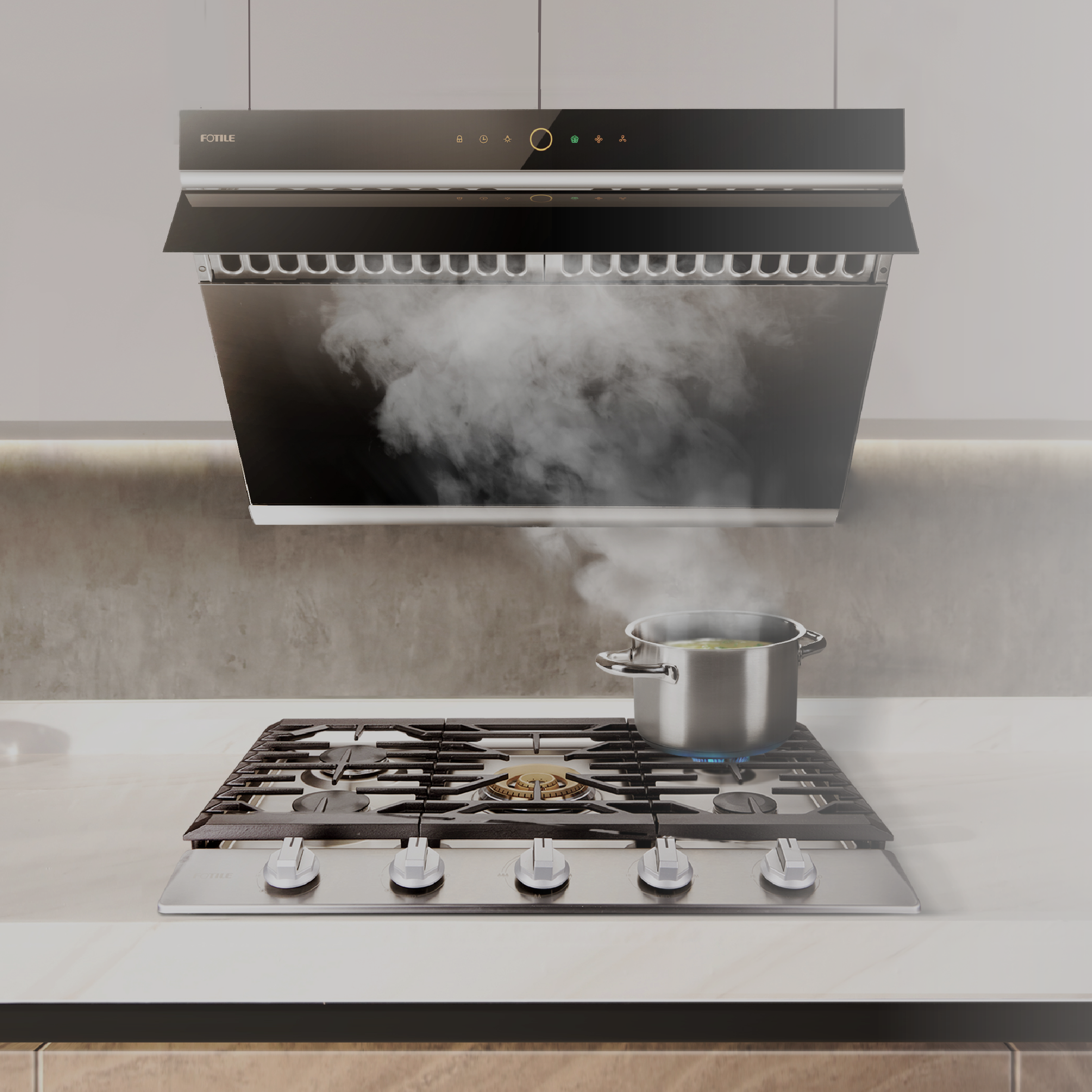
The right range hood CFM depends on your cooktop width, total heat output, kitchen size, installation location, and ductwork. As a starting point, a wall-mounted hood may be sized at approximately 100 CFM per linear foot of cooktop, while an island hood may require approximately 150 CFM per linear foot.
Gas ranges also require a heat-output calculation, and larger kitchens should be checked using room volume. Calculate each figure that applies to your kitchen and use the highest result as your starting point.
A properly sized range hood can help capture smoke, steam, grease, heat, and cooking odors before they spread through your kitchen. This guide explains each formula and the installation factors that can change the amount of airflow you need.
Quick Answer: Calculate Your Range Hood CFM
Use the formulas below as planning guidelines. Your appliance manual, range hood specifications, duct design, and local building requirements should also be considered before installation.
| Kitchen Factor | Starting Formula | Example |
|---|---|---|
| Wall-mounted hood over an electric or induction cooktop | Cooktop width in feet × 100 CFM | 30 inches ÷ 12 × 100 = 250 CFM |
| Island hood | Cooktop width in feet × 150 CFM | 36 inches ÷ 12 × 150 = 450 CFM |
| Gas range | Total burner BTUs ÷ 100 | 45,000 BTUs ÷ 100 = 450 CFM |
| Kitchen size | Length × width × height × 15 ÷ 60 | 12 × 15 × 10 × 15 ÷ 60 = 450 CFM |
Electric or Induction Cooktop Formula
For an electric or induction cooktop against a wall, multiply the cooktop width in feet by 100 CFM.
Formula: Cooktop width in inches ÷ 12 × 100 = recommended starting CFM
A 30-inch cooktop produces a starting estimate of 250 CFM. A 36-inch cooktop produces a starting estimate of 300 CFM. If you still need to determine the correct hood width, consult FOTILE’s range hood size guide.
Gas Range BTU Formula
Gas cooking produces combustion gases in addition to heat, smoke, grease, and moisture. Add the maximum BTU ratings of all burners, then divide the total by 100.
Formula: Total burner BTUs ÷ 100 = recommended starting CFM
For example, a gas range with 45,000 total BTUs produces a starting estimate of 450 CFM.
Kitchen Size Formula
Room volume provides another way to estimate how quickly the hood should move air through the kitchen.
Formula: Kitchen length × width × ceiling height × 15 air changes per hour ÷ 60 = CFM
For a kitchen measuring 12 feet long, 15 feet wide, and 10 feet high:
12 × 15 × 10 = 1,800 cubic feet
1,800 × 15 ÷ 60 = 450 CFM
Open-concept kitchens can be harder to evaluate because cooking air can move beyond the defined kitchen area. In that situation, have the layout reviewed during product selection or installation planning.
Which CFM Result Should You Use?
Calculate every formula that applies and begin with the highest result. A 36-inch gas cooktop may produce a 300-CFM width estimate but a 450-CFM BTU estimate. In that case, 450 CFM is the more appropriate starting point.
This number is not the only consideration. Island placement, long duct runs, multiple elbows, high mounting positions, and frequent high-heat cooking can all affect capture performance.

What Does CFM Mean for a Range Hood?
CFM stands for cubic feet per minute. It describes the volume of air a range hood can move in one minute under its stated test conditions.
A higher CFM rating indicates greater potential airflow, but it does not guarantee better performance in every kitchen. The hood must also capture cooking emissions effectively and move the air through properly sized ductwork. Hood width, canopy design, mounting height, duct resistance, and installation quality all influence real-world performance.
Factors That Affect How Much CFM You Need
The formulas establish a useful starting point. Review these additional factors before selecting a range hood.
Cooktop Width and Heat Output
A wider cooktop creates a larger cooking area, while higher-output burners can produce more heat and cooking fumes. Use cooktop width for the basic airflow calculation and total BTUs when evaluating a gas range.
Your hood should be at least as wide as the cooking surface. Depending on the kitchen layout, additional coverage beyond the cooktop edges may improve capture. Review the range hood size guide before choosing a model.
Wall-Mounted vs. Island Installation
A wall helps contain and direct the rising plume of heat, smoke, and grease toward a wall-mounted hood. An island hood has no wall behind it, so air can spread in more directions.
For planning purposes, island installations typically use approximately 150 CFM per linear foot of cooktop instead of the 100-CFM wall-mounted guideline.
Duct Length, Diameter, and Bends
A short, straight duct path generally moves air more efficiently than a long route with several elbows. Narrow ducts, sharp turns, flexible duct material, leaks, and restrictive exterior caps can create resistance and reduce delivered airflow.
Do not rely on a larger blower to correct an undersized or poorly designed duct. Follow the model’s required duct diameter and maximum run guidance. FOTILE’s range hood installation guide provides additional planning considerations.
Kitchen Size and Layout
Large kitchens, high ceilings, and open layouts contain more air and give cooking emissions more room to spread. Use the kitchen-volume formula as a secondary check, then compare it with the cooktop-based result.
Cooking Habits
Frequent frying, searing, wok cooking, grilling, and other high-heat methods create more smoke, grease, and odors than light simmering or occasional cooking. Households that cook intensively may benefit from additional capacity and multiple fan speeds.
Mounting Height, Fan Speed, and Noise
A hood installed too high may have difficulty capturing emissions before they spread. A hood installed too low may interfere with cooking or fail to meet the appliance manufacturer’s clearance requirements. Always follow the mounting range specified for the exact hood and cooktop.
Multiple fan speeds let you use quieter, lower airflow for light cooking and reserve maximum performance for high-heat meals.
Can a Range Hood Have Too Much CFM?
More airflow is not automatically better. A range hood that is oversized for the kitchen or installed without adequate replacement air can contribute to negative indoor pressure.
Potential problems include:
- Backdrafting from naturally vented fuel-burning appliances
- Additional make-up air or code requirements
- More noticeable fan and air-movement noise
- Ductwork that cannot accommodate the hood’s airflow
- Unnecessary equipment and installation costs
- Reduced HVAC balance while the hood operates
A slightly higher-capacity, multi-speed hood can provide useful flexibility. The goal is to choose enough capacity for demanding cooking without ignoring duct design, replacement air, and local installation requirements.

When Is Make-Up Air Required?
A ducted range hood sends indoor air outside. Make-up air replaces that exhausted air so the home does not become excessively depressurized.
Many jurisdictions base their rules on model codes that require make-up air for domestic kitchen exhaust systems rated above 400 CFM. However, adopted code editions, exceptions, enforcement, and system-design requirements vary by location.
Before installing a high-CFM hood, ask the local building department or a qualified HVAC professional:
- Whether the hood’s rated airflow triggers a make-up air requirement
- Whether fuel-burning appliances affect the system design
- How the replacement air must be introduced
- Whether the make-up air must be heated or cooled
- Which permits and inspections are required
Include this step early in the project because a make-up air system can affect the installation plan and budget.
Does Ducted vs. Ductless Change Your CFM Needs?
Yes. A ducted range hood captures cooking emissions and exhausts the air outdoors. Its performance depends on the hood, blower, duct path, exterior termination, and replacement air entering the home.
A ductless or recirculating hood pulls air through grease and odor filters before returning it to the kitchen. Because it does not exhaust air outdoors, its airflow rating should not be interpreted as the same level of ventilation provided by a ducted system.
Ductless installation may be practical when exterior venting is not available, but filter maintenance and cooking habits become especially important. Compare the installation requirements and tradeoffs in FOTILE’s guide to ducted and ductless range hoods.
Understanding FOTILE Max Equivalent CFM
Some FOTILE product listings use Max Equivalent CFM to help describe comparative extraction performance. This figure may account for more than blower airflow alone, including how the hood’s shape, capture area, motor, and grease-separation design work together.
Do not automatically treat equivalent CFM and measured exhaust airflow as interchangeable. When evaluating make-up air, duct size, permits, or code compliance, review the exact model specifications and use the airflow measurement required by the local authority.
FOTILE range hoods also use features such as Capture-Shield design, WhisPower motors, and airflow control based on the Coanda Effect to capture cooking emissions near the source. Compare the complete specifications instead of choosing a hood from one airflow number alone.
Choosing Your FOTILE Range Hood
FOTILE offers several range hood styles for different cooktop widths, kitchen layouts, cooking habits, and ventilation options. Compare each model’s rated airflow, width, mounting requirements, duct compatibility, noise level, and available fan speeds before making a decision.
Pixie Air Series for Compact and Medium Kitchens
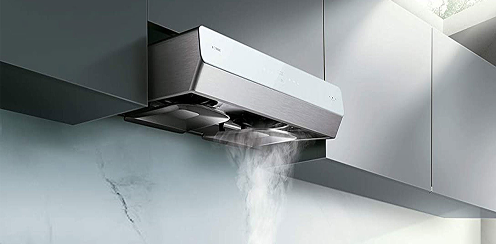
The Pixie Air Series includes under-cabinet options designed for kitchens where space, flexible installation, and quieter operation are priorities. Select models support either ducted or recirculating installation with the appropriate components.
Inclined Vent Series for Frequent and High-Heat Cooking
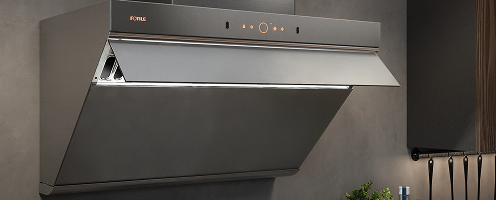
The Inclined Vent Series positions the capture opening closer to the cooking surface. Available models offer different widths, airflow specifications, controls, and finishes for households that cook frequently or use high-heat methods.
Perimeter Vent Series for Larger Kitchens
The Perimeter Vent Series includes wall-mounted options for homeowners seeking broader cooktop coverage and additional ventilation features. Check the specifications for each model because size, airflow, controls, and installation requirements vary.

Compare all available FOTILE range hoods, then confirm your cooktop width, total gas BTUs, duct path, mounting clearance, and local make-up air requirements before ordering.
FAQs
Frequently Asked Questions About Range Hood CFM
How Many CFM Do I Need for a 30-Inch Range?
Using the wall-mounted width guideline, a 30-inch range produces a starting estimate of 250 CFM. If it is a gas range, calculate total BTUs as well. Use the higher applicable result and adjust for the kitchen layout, cooking habits, and duct design.
How Do I Calculate CFM for a Gas Range?
Add the maximum BTU ratings of all burners and divide the total by 100. A gas range rated at 50,000 total BTUs produces a starting estimate of 500 CFM. Check the appliance manufacturer’s ventilation recommendations before selecting a hood.
Do Electric and Induction Cooktops Need a Range Hood?
Electric and induction cooktops do not produce gas-combustion byproducts, but cooking can still release smoke, grease, steam, heat, and odors. A properly sized hood can capture these emissions and help keep them from spreading through the kitchen.
Is It Bad to Choose a Range Hood With Too Much CFM?
Excess capacity can increase noise, create pressure imbalances, exceed the capacity of the duct system, or trigger make-up air requirements. A multi-speed hood provides flexibility, but the maximum airflow should still fit the kitchen and installation.
Does Ductwork Affect Range Hood Performance?
Yes. Narrow ducts, long runs, multiple elbows, flexible material, air leaks, and restrictive exterior caps can reduce delivered airflow. Follow the range hood manufacturer’s duct requirements rather than trying to compensate for poor duct design with blower power alone.
Does CFM Mean the Same Thing for a Ductless Range Hood?
No. A ductless hood moves air through filters and returns it to the kitchen, while a ducted hood exhausts air outdoors. CFM can describe air movement in either system, but a recirculating hood does not provide the same type of ventilation as a properly installed ducted hood.